
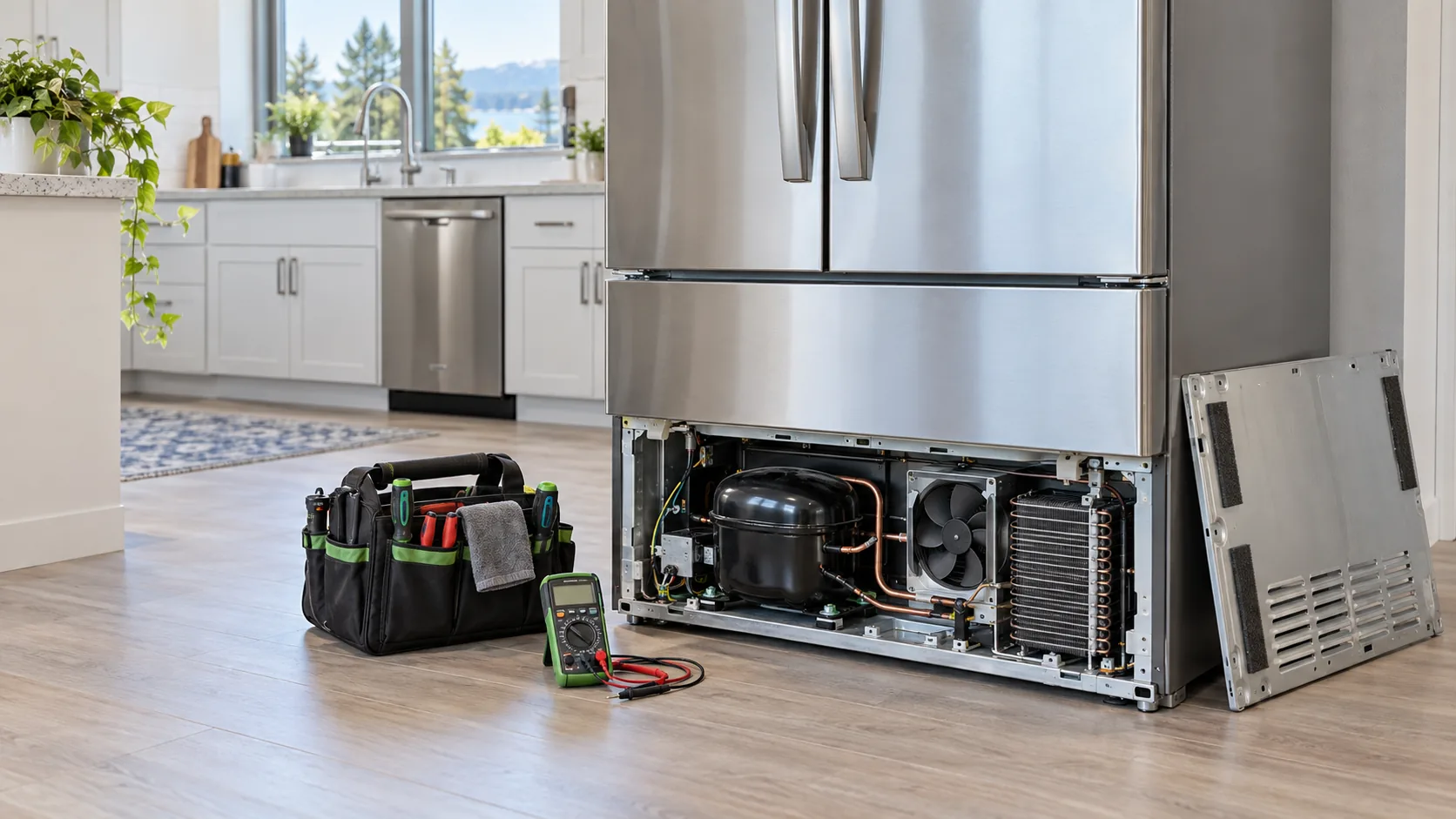
Quick answer
A refrigerator is never completely silent. A soft hum from the compressor or fans, a brief click when a control changes state, gentle gurgling as refrigerant moves, a hiss during defrost, and the sound of ice dropping into the bin can all be normal. The more important questions are whether the noise is new, unusually loud, continuous, tied to a loss of cooling, or coming with heat, odor, leaking water, frost, or an error code.
Before moving the refrigerator or removing any panel, listen from the front, inside each compartment, near the ice maker, and near the lower rear area. Note exactly when the sound starts and stops. A ten-second video that captures both the sound and the display is often more useful than a description such as “buzzing.” Safe external checks can identify vibration and installation problems; fan, compressor, sealed-system, electrical, and ice-maker repairs require model-specific diagnosis.
Stop for burning odor, electrical damage, or unsafe food temperatures
Disconnect power and arrange service if the sound comes with smoke, sparking, a burning-plastic or electrical odor, a hot or discolored plug, repeated breaker trips, or visible wiring damage. Do not reach behind a running refrigerator near fans, terminals, tubing, or the compressor. Never puncture frost or ice with a sharp tool and never use a hair dryer, heat gun, or open flame to speed defrosting.
A noise complaint can also be a cooling complaint. Use an appliance thermometer rather than judging food temperature by touch. The FDA recommends keeping the fresh-food compartment at 40°F (4°C) or below and the freezer at 0°F (-18°C). If temperatures are rising, keep the doors closed, protect perishable food, and treat cooling diagnosis as the priority.
First identify where and when the sound occurs
Sound travels through a refrigerator cabinet, so the loudest point is not always the failed part. Start by recording the pattern without opening a service panel. Does the noise begin when the compressor starts, stop when a door opens, occur only while filling the ice maker, follow a defrost cycle, or happen when a door or drawer moves?
Check whether the fresh-food and freezer temperatures remain stable. Look for frost on the rear freezer wall, water under or inside the cabinet, a display code, weak airflow, an ice maker that is on without a water supply, or food packages touching an air vent. Record the model and serial number because fan locations, ice systems, variable-speed compressors, dampers, and diagnostic procedures differ by model.
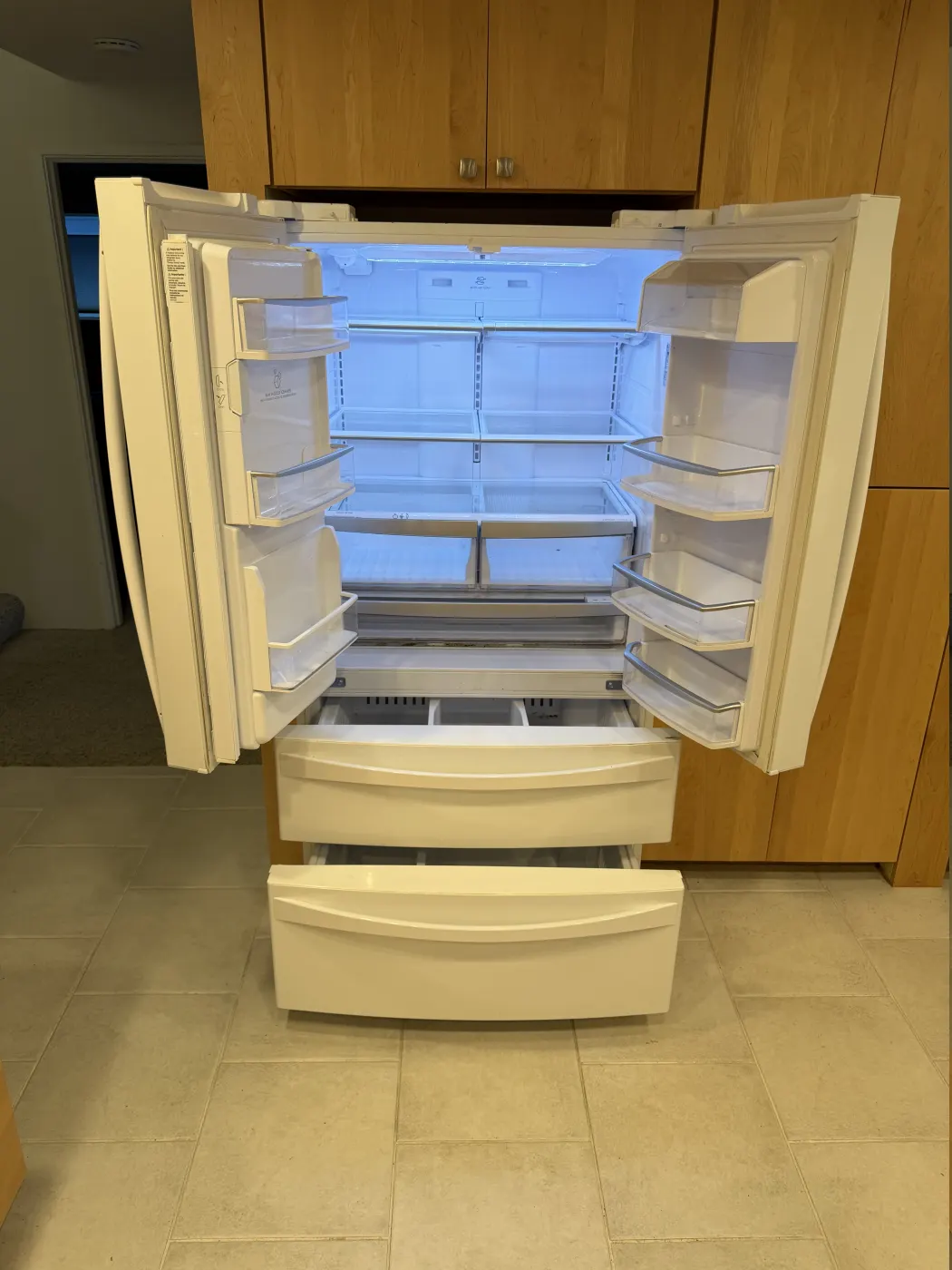
Normal sounds a refrigerator may make
Duration, volume, and the refrigerator’s temperature matter more than the sound word alone.
- A low steady hum or soft change in pitch as a compressor or fan changes speed
- A brief click when a relay, control, damper, compressor, or defrost cycle starts or stops
- Gentle gurgling, bubbling, or flowing-water sounds as refrigerant and defrost water move
- Brief hissing or sizzling when defrost water reaches a warm heater or drain area
- Popping or cracking as interior liners and components expand and contract with temperature
- A short buzz when the water valve fills the ice maker
- A distinct clatter when ice cubes fall into an empty storage bin
- Soft airflow or whooshing from evaporator and compartment fans
Rattling or vibration: start with the installation
A quiet compressor or fan can become much louder when vibration transfers into a cabinet, wall, water line, pan, shelf, or object stored on top. Make sure the refrigerator is stable and does not rock when a door is opened. Check for containers touching each other, a loose removable shelf or bin, objects on top, and a water line tapping the wall or cabinet. Maintain the clearances required by the installation guide; do not pack material around the cabinet to absorb sound.
If the unit was recently moved, confirm that it is level and that the doors align and close normally. Use only the owner’s manual procedure for leveling feet or rollers. A heavy built-in or column refrigerator should not be pulled out by a homeowner because it may be secured to cabinetry and connected to water, power, and anti-tip hardware.
Clicking: control activity or a start problem
An occasional click can be normal when a relay, control board, damper, defrost system, or compressor changes state. The pattern becomes more concerning when clicking repeats every few seconds, the compressor does not stay running, interior temperature rises, or the sound began with a power problem.
Rapid start-and-stop attempts can involve supply voltage, a start device, wiring, compressor protection, an inverter system, or the compressor itself. Do not repeatedly unplug and reconnect the refrigerator to test it. Record the timing and have the model-specific start circuit evaluated if cooling is affected.
Buzzing or humming: water valve, fan, or compressor
A brief buzz during an ice-maker fill is usually the water inlet valve operating. If the ice maker is switched on while no water line is connected or the household supply is closed, the valve may buzz at regular intervals while it tries to fill. Use the model’s control to turn the ice maker off until water service is available. Do not loosen the water connection while the supply is on.
A steady low hum can come from a normally operating compressor or fan. A new loud buzz, a hum that is accompanied by poor cooling, or a component that starts and immediately stops needs diagnosis. The technician must distinguish sound transmitted by tubing or panels from a motor, inverter, start device, fan, or compressor problem.
Whirring, chirping, or scraping that changes when a door opens
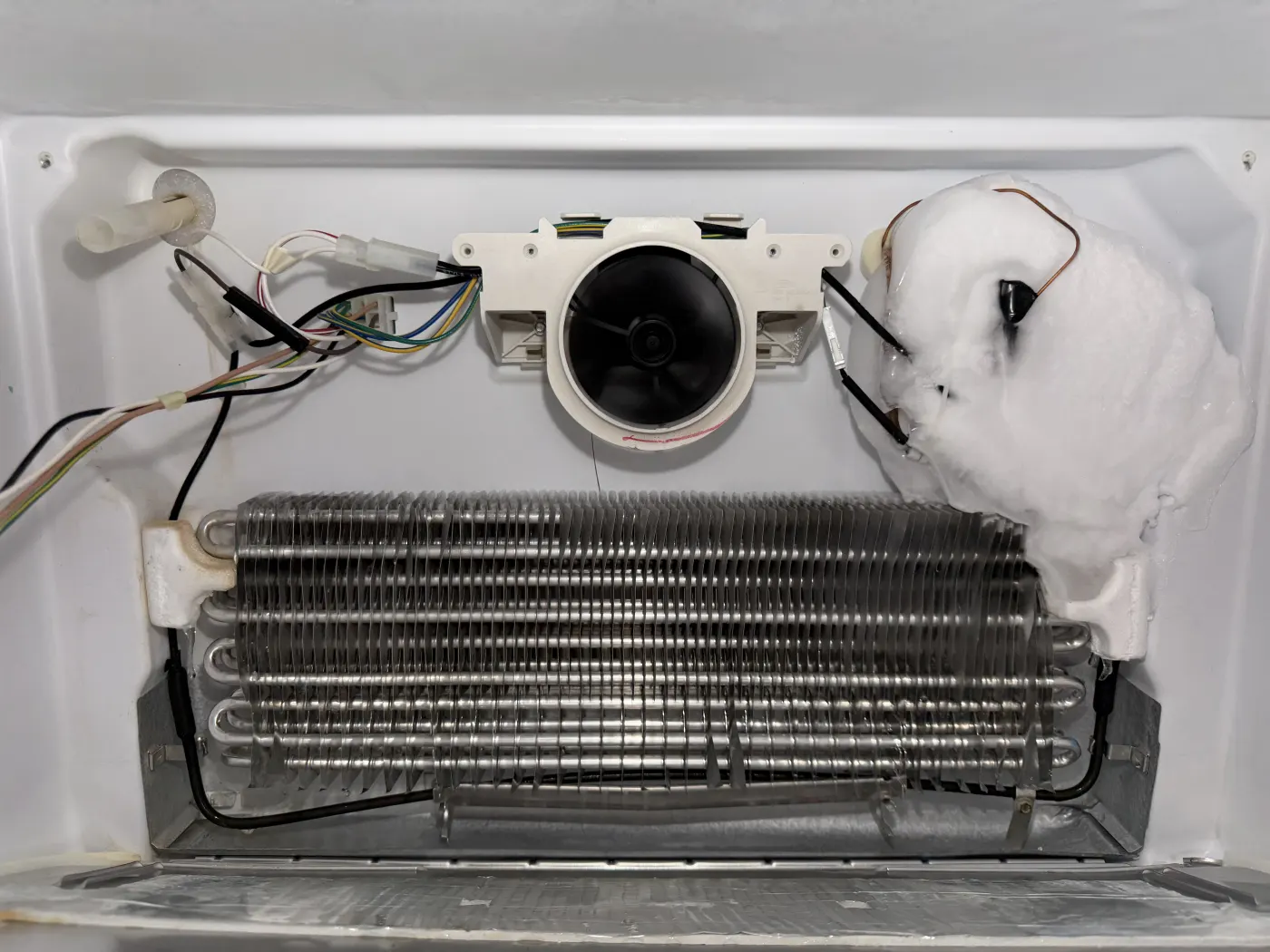
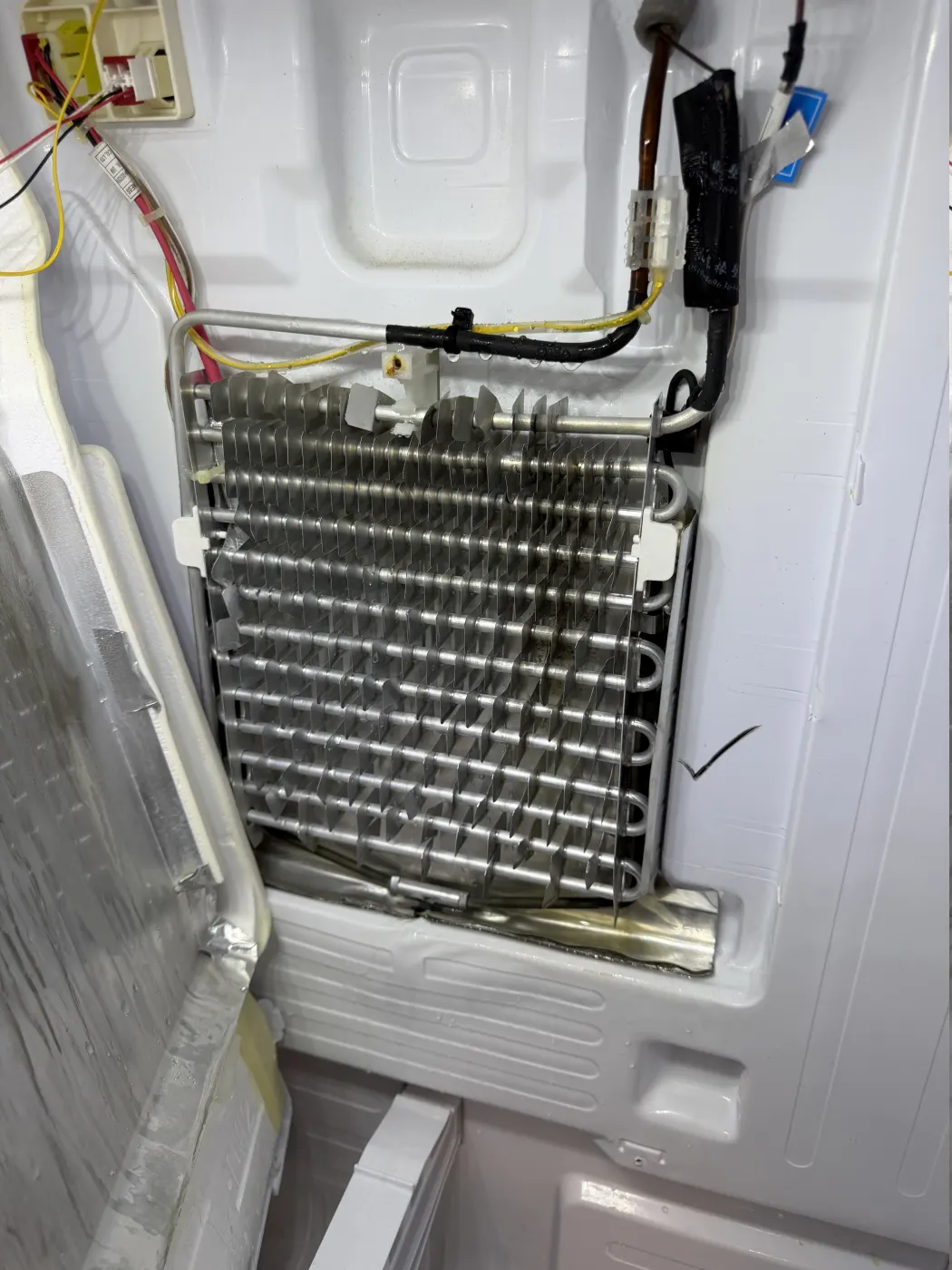
Many refrigerators stop an evaporator fan when a door switch indicates that a door is open. If a whirring, chirping, or scraping sound stops immediately when you open the freezer or fresh-food door and returns after the switch is activated, the sound may be associated with a compartment fan. Possible causes include ice near the fan, a loose obstruction, a worn motor, or a damaged fan blade or housing.
Do not insert tools through an air vent or hold a door switch while reaching into the fan area. Visible frost on an interior rear panel, weak airflow, or repeating fan contact after defrosting points to a cause that should be diagnosed rather than repeatedly melted away.
Grinding or scraping is not a sound to ignore
Grinding can occur during crushed-ice dispensing, but grinding when the dispenser is not being used is different. It may come from a fan contacting ice or a housing, a worn motor or bearing, an ice-auger mechanism, a damper, or another moving assembly. A scrape tied only to a door movement may instead involve a hinge, gasket, drawer, or door alignment.
Stop operating the ice dispenser if it binds or grinds. If the sound is continuous, getting louder, or accompanied by reduced airflow or cooling, arrange service before the moving part causes additional damage.
Banging, knocking, and thumping
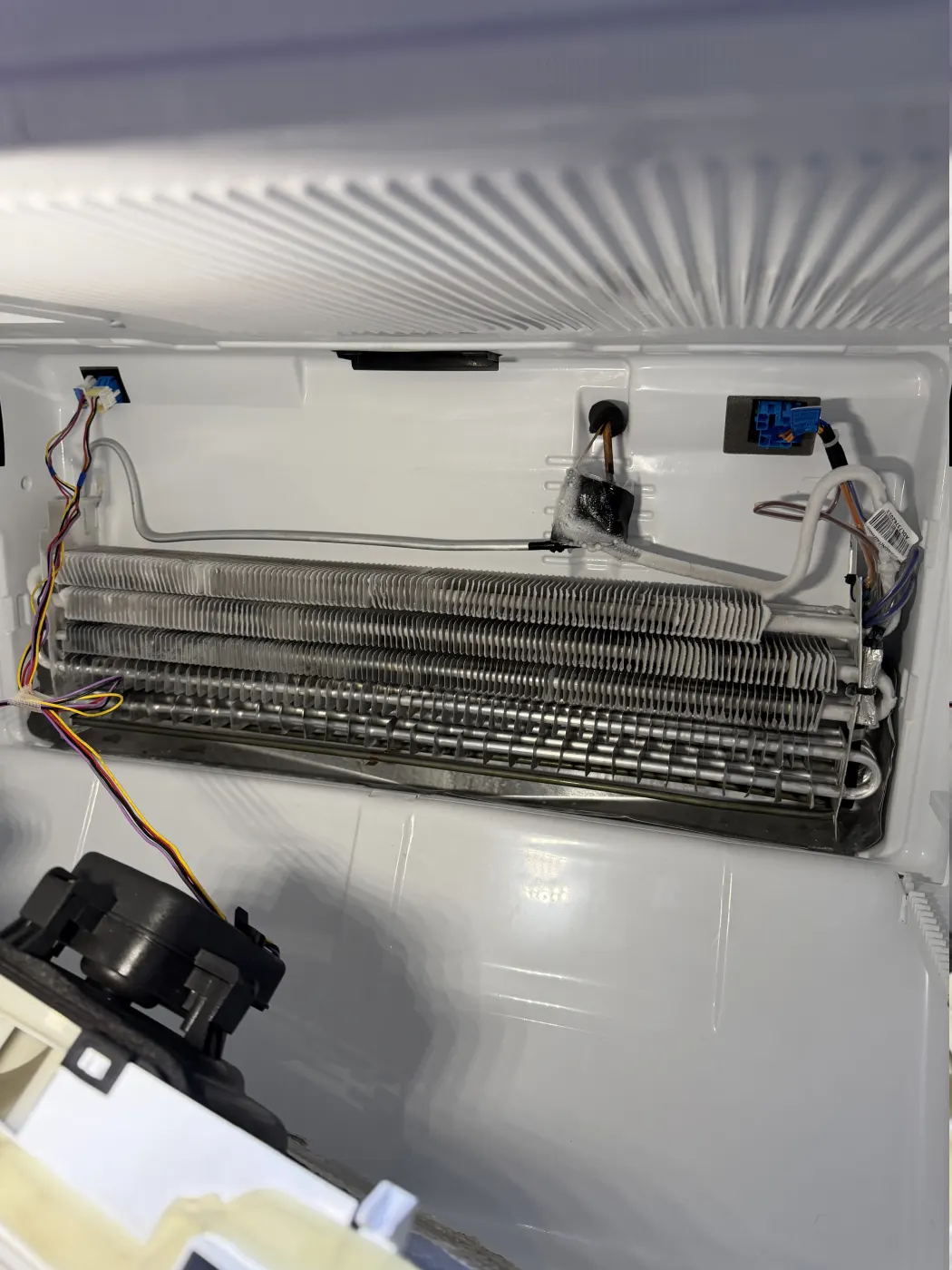
Ice falling into an empty bin can sound surprisingly loud and is normally intermittent. A single thump as a compressor or fan stops may also be normal on some models. Repeated knocking can come from an unstable cabinet, tubing touching the frame, a loose drain pan, a water line reacting when a valve closes, or an internal mechanical problem.
Compare the timing with ice production, water dispensing, door movement, and compressor operation. Do not bend refrigerant tubing or wedge material into the mechanical compartment. Water hammer in the household plumbing and internal refrigerator noise require different corrections.
Gurgling, hissing, sizzling, and popping
Refrigerant changes pressure and state as it moves through the sealed system, so gentle gurgling or bubbling can be normal near the beginning or end of a cooling cycle. During automatic defrost, water can drip toward a warm heater or drain area and briefly hiss or sizzle. Interior liners, shelves, and tubing may pop or crack as their temperature changes.
These sounds become more significant when they are unusually loud, newly continuous, accompanied by an oily residue, chemical odor, loss of cooling, heavy frost, or water that is not reaching the drain pan. Do not attempt to open, recharge, or repair the sealed refrigerant system yourself.
Ice maker and water-system noises
An ice maker cycles through motor movement, cube release, and water fill. You may hear a motor, click, buzz, or clatter at different points. An empty bin makes falling cubes sound louder. A brief valve buzz is expected during fill, but repeated buzzing without water, chattering during dispensing, a slow fill, leaking, hollow or small cubes, or a grinding auger deserves attention.
Confirm that the water supply is open, the line is not visibly kinked, the filter is the correct model and fully seated, and the ice maker is off if the refrigerator is not connected to water. Do not remove a pressurized valve or line as a troubleshooting step.
A loud compressor area does not automatically mean a failed compressor
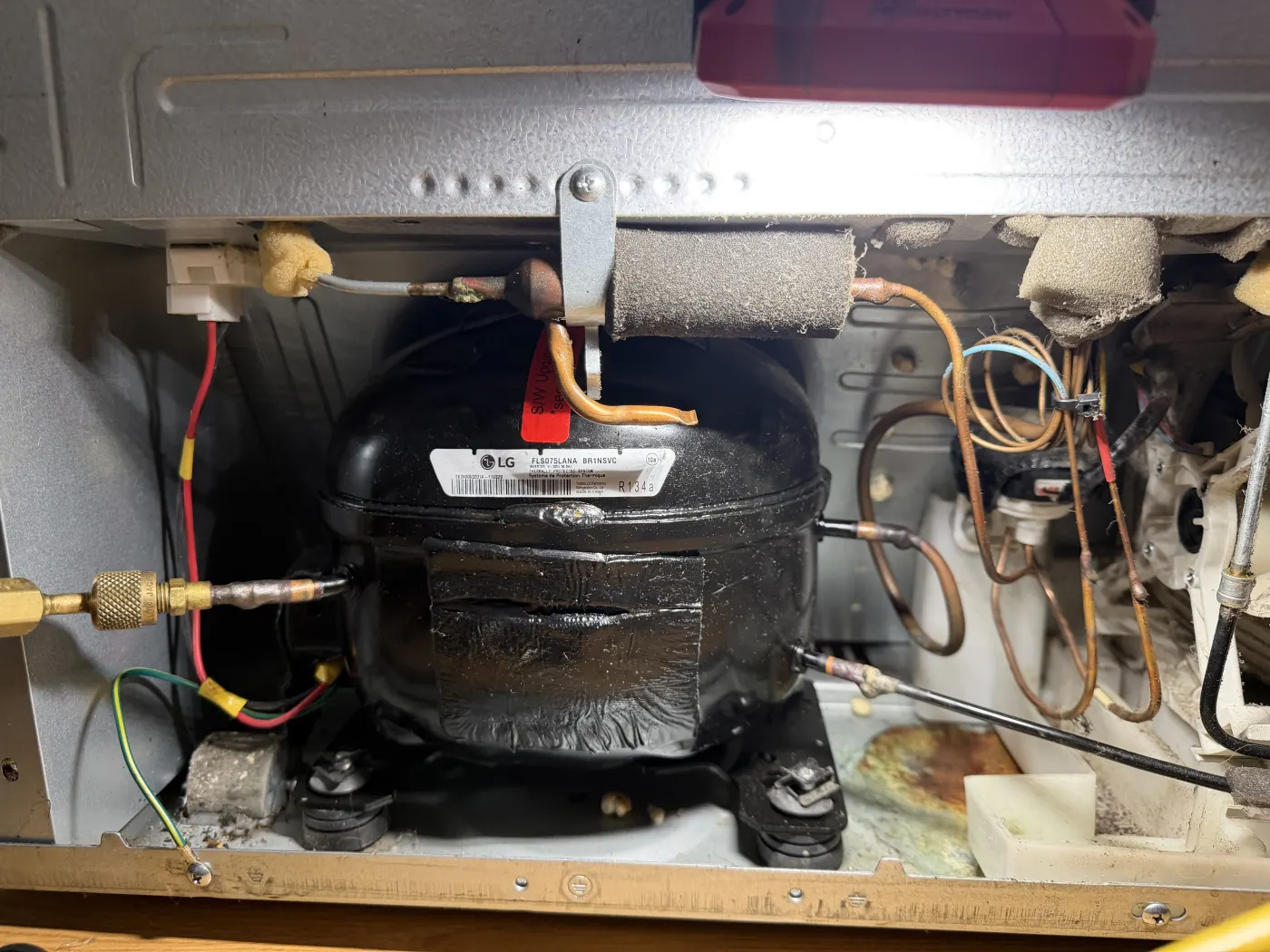
The lower rear compartment contains components that can transmit sound through the cabinet: the compressor, condenser fan on applicable models, tubing, mounts, wiring, drain pan, and covers. Variable-speed compressors can change pitch as cooling demand changes. After installation, a large grocery load, long door opening, warm room, or defrost recovery, the refrigerator may run longer or sound more active.
A technician checks temperatures, compressor command and current, fan operation, vibration points, condenser condition, and sealed-system performance before condemning an expensive component. Sound alone is not enough to select a compressor, inverter, or start device.
Safe checks you can do without removing a panel
Use the model’s owner and installation manuals whenever an adjustment is required.
- Measure refrigerator and freezer temperatures with appliance thermometers
- Record a clear video of the noise, display, and door position
- Note whether opening a specific door changes or stops the sound
- Confirm the refrigerator is stable, level, and not touching a wall or cabinet
- Remove objects from the top and separate containers that vibrate against each other
- Make sure shelves, bins, and drawers are fully seated
- Check for visible frost, water, an error code, weak airflow, or a door that does not seal
- Turn the ice maker off if no water supply is connected
- Check only visible water-line kinks and model-required exterior clearances
- Write down the full model and serial number before arranging service
What not to do when chasing a refrigerator noise
Do not remove a rear or interior service panel while the refrigerator is energized. Do not touch a moving fan, compressor terminal, inverter board, capacitor, heater circuit, or exposed connector. Do not bend refrigerant lines, puncture ice with a knife or screwdriver, apply direct heat to an evaporator cover, or spray lubricant into a fan, hinge, damper, or ice mechanism unless the manufacturer specifically instructs it.
A temporary silence after pressing on a panel or defrosting ice does not prove the root cause is corrected. Document the symptom before changing anything so an intermittent fan, defrost, water, or compressor problem can be reproduced.
How a technician narrows down the source
Diagnosis begins by reproducing the sound and matching it to a component or operating event. The technician verifies actual compartment temperatures, door-switch response, fan operation, frost pattern, ice-maker sequence, water-valve operation, compressor behavior, cabinet vibration, and any stored error information. Service data for the exact model determines how fans, dampers, heaters, valves, and variable-speed components are commanded.
Electrical testing may include resistance, continuity, supply, control output, and current measurements. Cooling diagnosis can require temperature and pressure-related evidence, airflow checks, and sealed-system experience. The goal is to identify both the noisy part and the condition that made it noisy, such as ice buildup from a defrost or air leak problem.
When to schedule refrigerator service
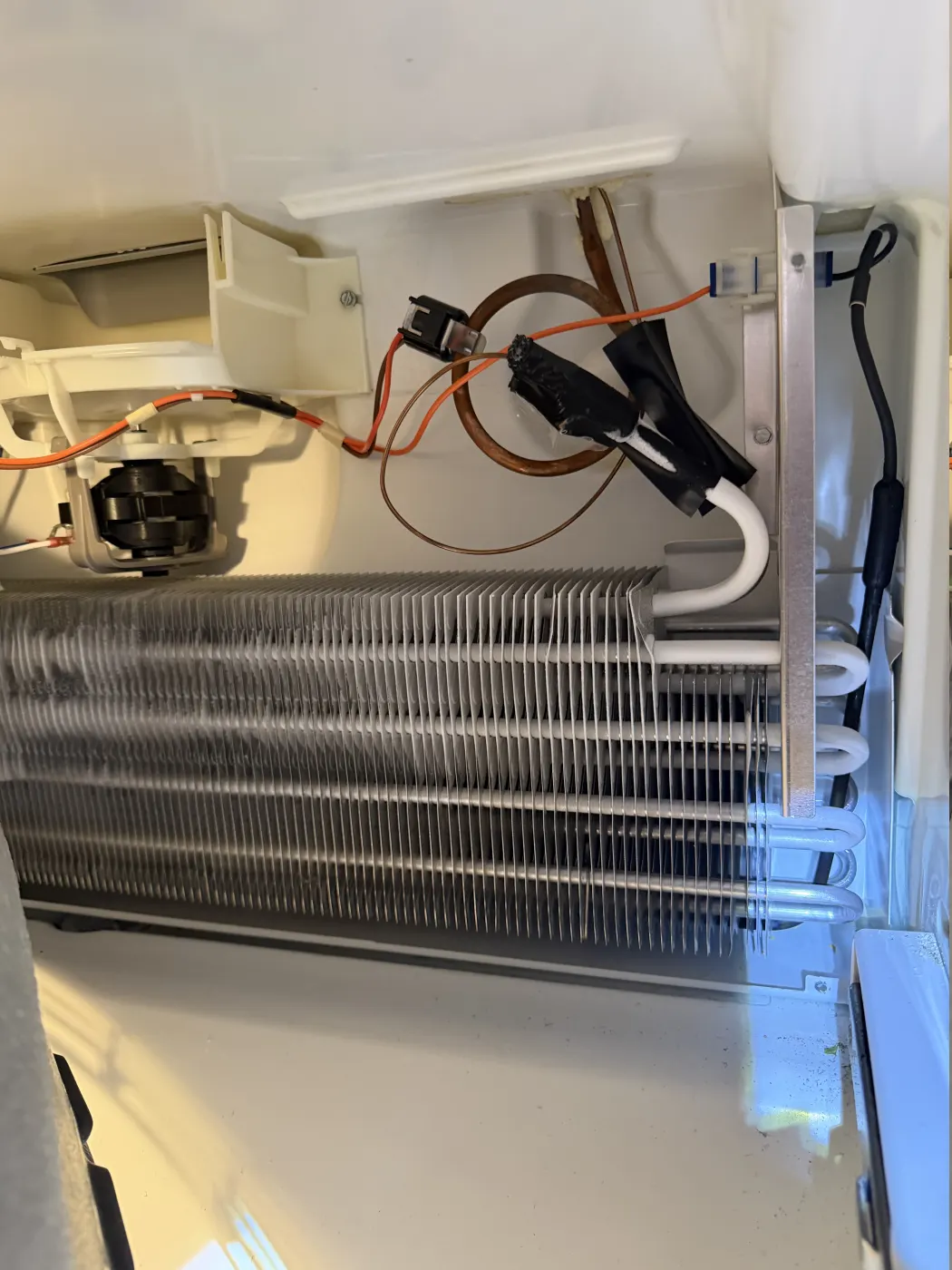
Arrange diagnosis when the noise is new and persistent, interrupts conversation, repeatedly returns after a basic installation check, or is accompanied by temperatures above the safe range, frost, leaking water, weak airflow, a fan striking ice, repeated clicking without normal cooling, a hot plug, burning odor, or an error code. Service is also appropriate for a built-in refrigerator that must be moved, an intermittent noise that is becoming more frequent, or any repair involving a fan behind a panel, compressor, sealed system, heater, water valve, or energized electrical test.
Keep the doors closed if cooling is failing. Move vulnerable food to another refrigerator or an ice-filled cooler as needed, and use measured time and temperature rather than smell or appearance to decide whether food is safe.
Is a refrigerator supposed to run all the time?
Not necessarily, but modern variable-speed refrigerators may run for long periods at low output. Run time increases after installation, grocery loading, frequent door openings, warm weather, or defrost. Continuous operation combined with rising temperature, heavy frost, poor door sealing, or a new loud sound should be diagnosed.
Why does the noise stop when I open the freezer door?
Many models stop the evaporator fan when a door opens. If the sound stops immediately and returns after the door closes, a compartment fan or nearby ice may be involved. Do not reach into the vent or fan area; record the behavior and inspect only for visible frost or an obstructed air path.
Why does the refrigerator buzz every few minutes?
A repeating short buzz may be related to an ice maker requesting water when the supply is closed or disconnected. It can also come from a control or component attempting to start. Check the ice-maker and water-supply condition first. If cooling is affected or the pattern continues with the ice maker off, schedule diagnosis.
Can I keep using a noisy refrigerator?
A quiet, brief sound that matches normal cooling, defrost, or ice-making operation is usually not urgent when temperatures remain correct. Stop and arrange service for burning odor, electrical damage, repeated breaker trips, a fan hitting ice, leaking near electrical components, loss of cooling, or a loud mechanical sound that is getting worse.
